Holiday 2025: How Retailers Can Unlock Growth in a Flat Spending Season

Shoppers are approaching Holiday 2025 with restraint. The National Retail Federation projects sales growth of just 3–4%—the weakest in years—as inflation, higher tariffs, and fragile consumer confidence weigh on spending decisions.
To better understand what this means for retailers, NewStore and Stripe surveyed more than 1,000 U.S. shoppers about their shopping preferences and payment expectations. The results show that while most households don’t plan to buy more overall, they will shift spend toward retailers that deliver clarity, flexibility, and connection. For families with children and younger adults, these factors even translate into a greater willingness to stretch budgets.
Here are five insights shaping the 2025 holiday season:
1. Holiday spending will be flat overall, but families and young adults stand out
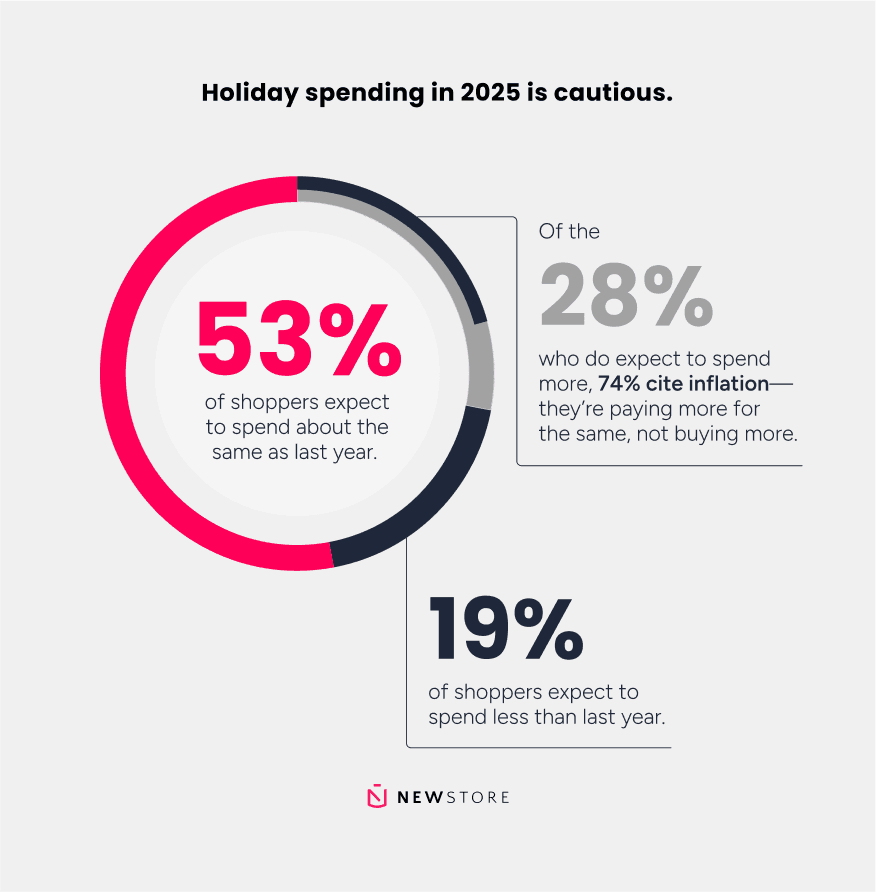
Shoppers remain cautious: 53% expect to spend about the same as last year, and 28% expect to spend more. But for the majority, that “increase” isn’t about buying more, only paying more – 74% cite inflation as the driver, compared with just 26% who feel financially stronger and only 16% who plan to purchase pricier gifts.
Families and younger adults break the pattern. Thirty-nine percent of households with children expect to spend more, with one-third feeling more financially secure and another third buying for more people. Among 18–29-year-olds, 42% expect to spend more, with 37% citing stronger finances and 46% expanding their gift lists.
Takeaway for retailers: Most households are paying more for the same, but families and younger adults are expanding their holiday activity. Growth strategies should target these groups with promotions, personalized experiences, and campaigns that match their optimism and intent.
2. BNPL will reshape budgets, not just payments
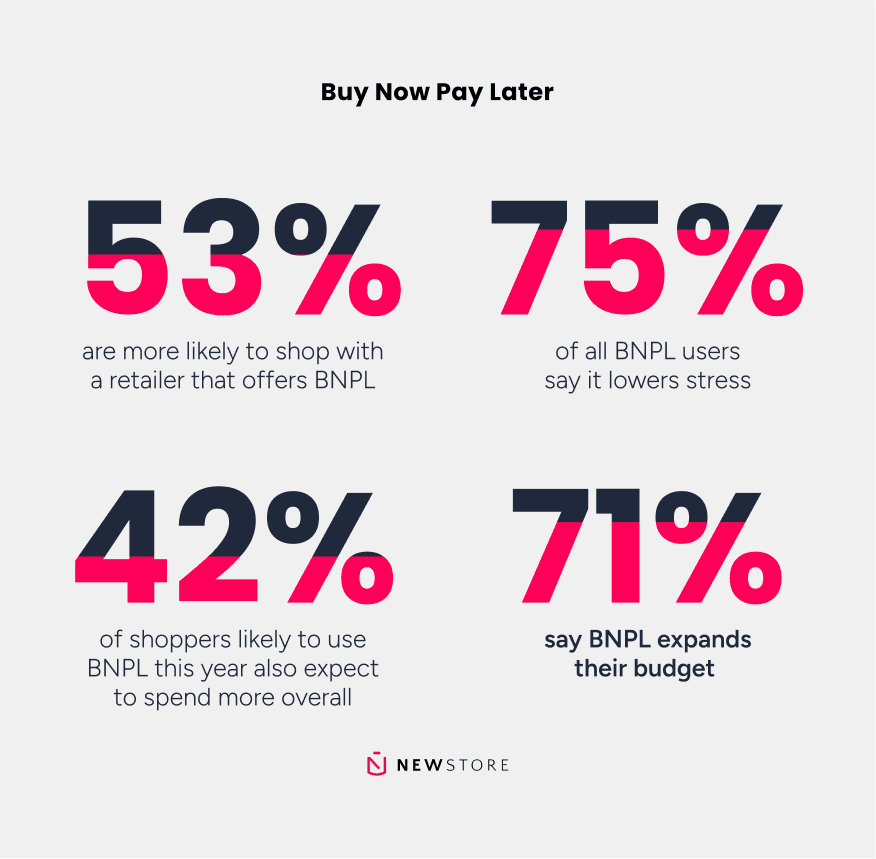
On the surface, BNPL looks small—only 18% of all shoppers say its availability alone makes them more likely to shop with a retailer. But among past users, its impact is significant: 53% are more likely to choose a retailer that offers BNPL, 61% plan to use it again this year, 75% say it lowers stress, and 71% say it expands their budget.
Importantly, 42% of shoppers likely to use BNPL this year also expect to spend more overall.
Adoption is strongest among groups already leaning toward higher holiday spend: nearly a third of 18–29-year-olds have used BNPL (78% will reuse this year), and 30% of families with children have adopted it (76% will reuse).
Takeaway for retailers: BNPL isn’t just another checkout option—it’s a budgeting lever. For younger households and families, it directly expands spending power. Retailers that offer BNPL are more likely to capture incremental holiday spend from these high-value segments.
3. Omnichannel convenience will drive conversion
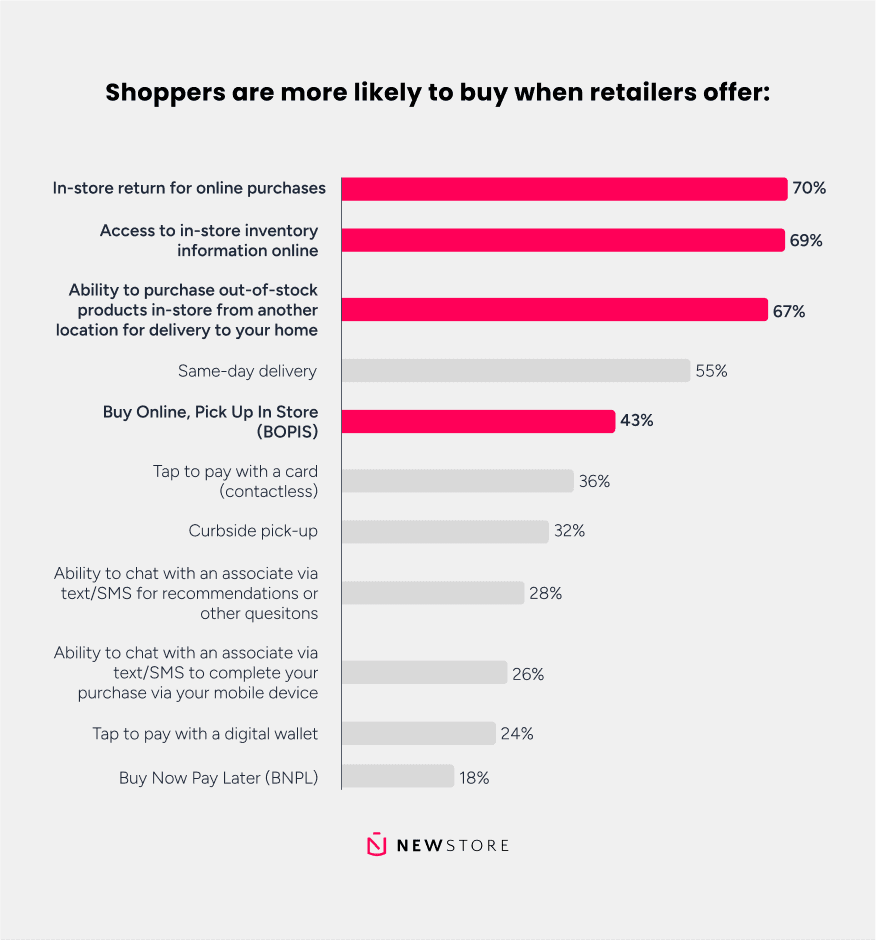
Shoppers reward retailers who connect channels. Seventy percent say they’re more likely to buy if they can return online purchases in-store. Nearly as many want to see store inventory online (69%) or order out-of-stock items in-store for home delivery (67%). And 43% say Buy Online, Pick Up in Store (BOPIS) would increase the chance they shop at a store.
Takeaway for retailers: Flexible returns, real-time inventory, and cross-channel fulfillment are powerful conversion triggers. With the right omnichannel systems, the same tools that win shoppers also keep goods in circulation and protect margins.
4. Shoppers want certainty more than speed
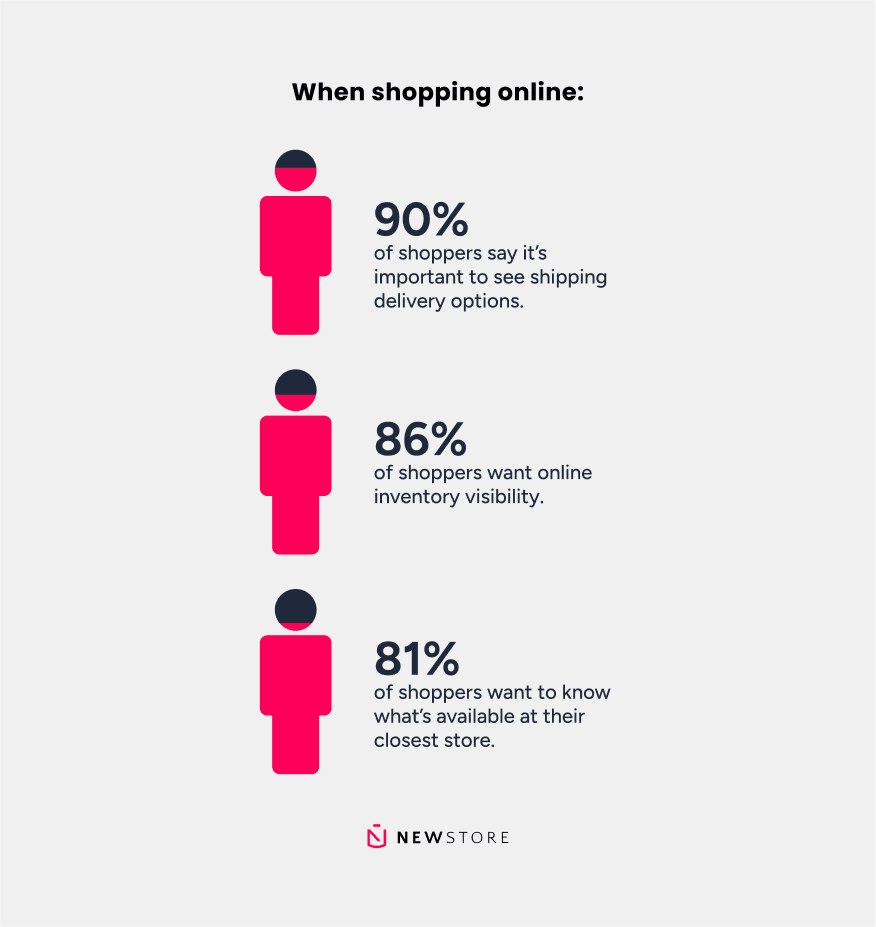
When shopping online during the holidays, information access is critical. Ninety percent of shoppers say it’s important to see shipping delivery options, 86% want online inventory visibility, and 81% want to know what’s available at their closest store.
But “shipping options” doesn’t necessarily mean “same-day.” When asked what would actually make them more likely to shop with a retailer, only 55% said same-day delivery would sway them. Reliability is the real issue: 53% of shoppers worry about purchases arriving on time, and that concern spikes to 66% among households with children.
Takeaway for retailers: Shoppers want assurance most of all. Clear delivery windows, real-time inventory, and checkout badges like “Arrives by Dec. 22” help build confidence and reduce cart abandonment during the holidays.
5. Channel habits stay steady, but younger shoppers will show more variety
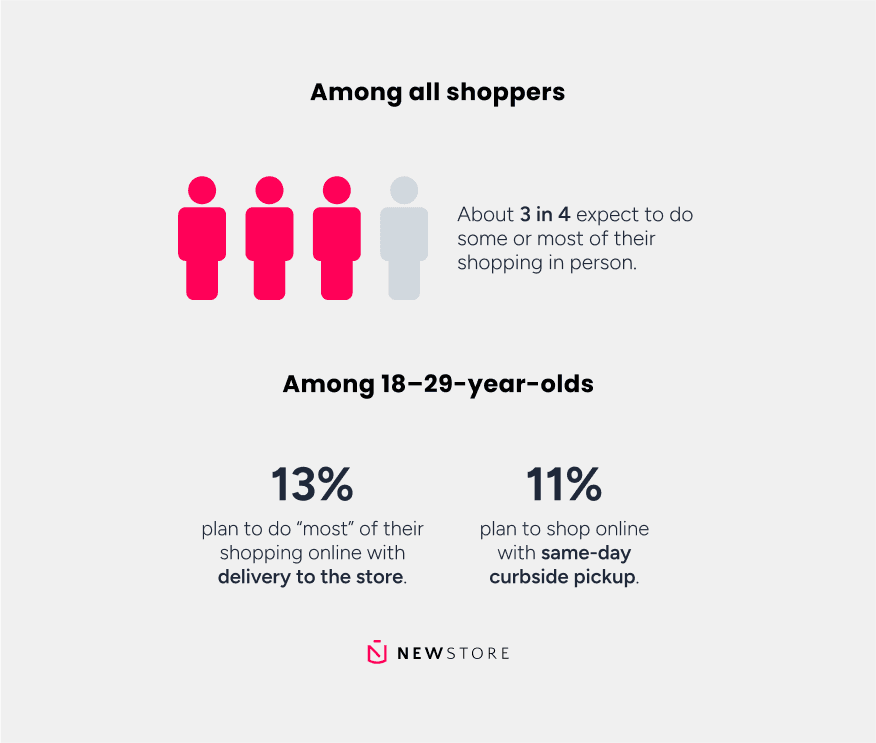
Most holiday shopping will follow familiar patterns. About 3 in 4 shoppers plan to do some or most of their shopping in-store, and a similar share plan to shop online with home delivery.
But among 18–29-year-olds, alternative channels play a bigger role: 13% plan to do “most” of their shopping online with delivery to the store, and 11% plan to shop online with same-day curbside pickup—roughly double the overall average. Households with children also lean a bit higher than average, with about 1 in 4 expecting to use each option at least “some” of the time.
Takeaway for retailers: In-store and home delivery still anchor holiday shopping, but younger adults and families are diversifying how they shop, making it important for retailers to invest in BOPIS, curbside, and ship-to-store as growth channels.
The Big Picture: Winning Holiday 2025
Holiday 2025 isn’t about bigger budgets—it’s about smarter spending. Families and younger adults represent real growth opportunities, BNPL is unlocking spending power, and omnichannel basics like returns, inventory visibility, and reliable delivery are decisive factors in conversion.
By combining NewStore’s mobile point-of-sale with Stripe’s advanced payment capabilities, retailers can deliver unified shopping experiences across channels, offering modern options such as BOPIS, tap-to-pay, and risk-free BNPL.
Ready to meet shoppers where it matters most? Contact us today to learn how we can help you unlock growth this holiday season.
What Makes a POS Modern? 5 Myths and 4 Questions to Ask
Mobile, cloud, feature lists: five myths about modern POS, and four questions that show how a platform will actually perform in your stores.
Oct 15, 2026
Mobile POS vs. Traditional POS System: What’s Really Different?
A traditional POS system and a mobile POS system can both process a transaction. The difference is what each one allows the store to do around it. Traditiona…
Jul 28, 2026
Five Signs You’ve Outgrown Your Legacy POS
Legacy POS systems don’t usually announce that they’ve reached their limits. Instead, they ask for one more workaround. One more integration. One more manual…
Jul 14, 2026