What’s Possible with a Modern Retail POS?

What your associates can do in the store determines what your customers experience. A modern retail POS changes both. Traditional point of sale systems were built for one thing: processing a transaction at a fixed counter. Everything else lived somewhere else: inventory, customer data, fulfillment, payments.
Modern retail does not work that way. Shoppers move across channels without thinking about it. They browse online, ask questions in-store, finish checkout on their phone, and return purchases at the counter.
Store teams need technology that can support those interactions wherever they happen.
Here is what becomes possible when the retail POS is built around how store teams actually work.
Sell Anywhere in the Store
Customers should not have to leave the interaction that led to a purchase. Whether they are on the sales floor, in a fitting room, or speaking with an associate during a busy period, checkout should happen naturally within that moment.
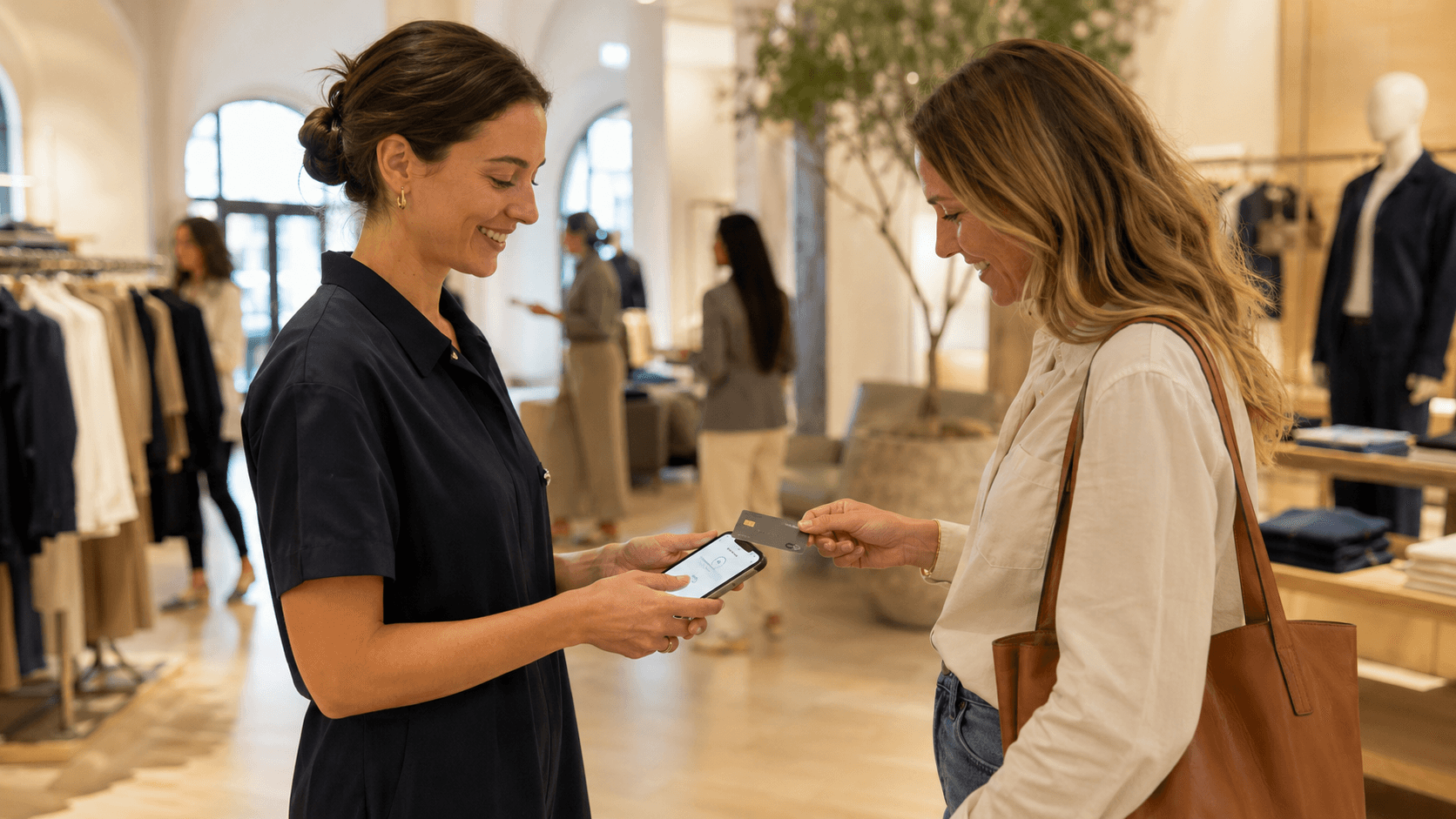
Mobile checkout removes the need for a fixed register. Associates can handle checkout directly, without redirecting customers to another part of the store, creating a faster and more connected experience.
The impact goes beyond convenience. When checkout is no longer limited to a single location, lines shrink and store teams can serve more customers during peak periods.
Mobile checkout also creates opportunities to build longer-term customer relationships. Information collected during checkout, such as an email address, becomes the foundation for clienteling, re-engagement, and personalized outreach. Many shoppers are willing to share that information when it simplifies future interactions, including returns and exchanges.
That also means payments need to work within the same flow. When payments are embedded in the POS rather than routed through a separate system, there is no handoff, no additional login, and no broken experience. The path from conversation to completed sale stays uninterrupted.
Mobile checkout is the foundation for everything else on this list. Without it, associates remain tied to a counter, and the rest of the store experience is forced to revolve around that limitation.
Know What Is Available Before Customers Ask
No associate should have to walk away from a customer to answer a basic inventory question.
Inventory accuracy impacts nearly every retail operation. It is critical to omnichannel, and without it, you can’t align supply with demand , wherever it may be coming from. If the system says an item is in stock and it is not, the customer experience breaks down. Endless aisle fails. Buy online pickup in-store (BOPIS) fails. Returns become harder to process.
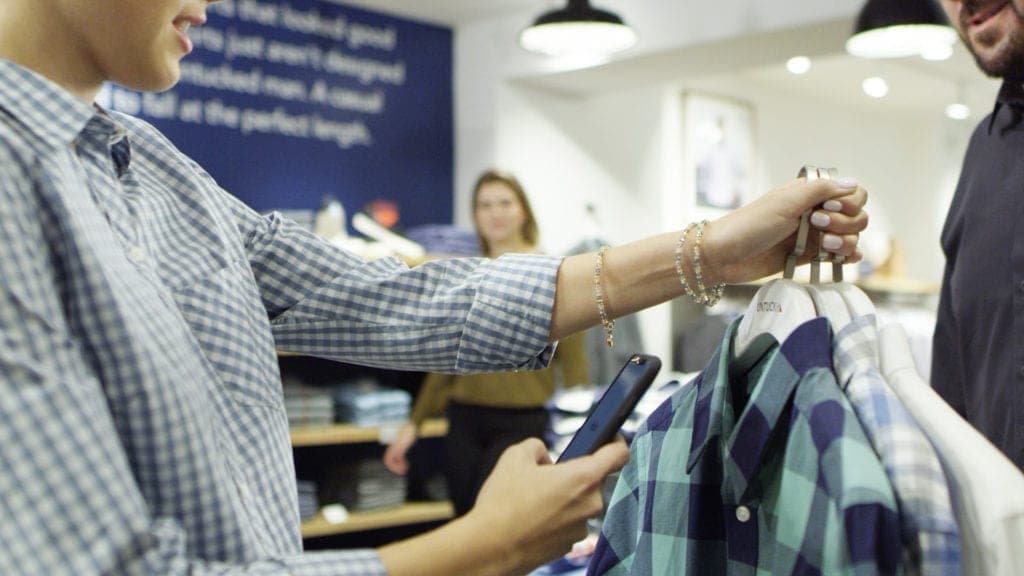
A modern POS gives associates real-time inventory visibility across stores and distribution centers. They can confirm availability without leaving the customer’s side, locate a different size in another store, or process a return that immediately puts the item back into sellable stock.
This is also where manual processes disappear. Spreadsheets and clipboards still support inventory management in many retail environments, creating unnecessary work and increasing the risk of errors. Connecting inventory directly to the POS helps associates spend less time searching for information and more time helping customers.
Never Lose a Sale to an Out-of-Stock Item
Endless aisle is what saves the sale when the item is not available in a store.
Instead of losing the sale to an out-of-stock, associates can access inventory across stores, warehouses, and distribution centers, then ship the item directly to the customer or arrange pickup at another location.
Across NewStore’s customer base, brands have seen about 11 % lift in store sales from endless aisle. Those are sales that might otherwise have been lost if there wasn’t a mechanism in place to access and sell enterprise-wide inventory. They may also be sales from upselling or cross-selling. If a customer wants a top to go with their bottoms, but you don’t carry it, order it from another location for home delivery.
The value of the endless aisle will only grow as retailers optimize inventory levels and rethink the role of the store. Carrying every size, color, and style in every location is expensive. Endless aisle gives retailers more flexibility while still allowing customers to access the full assortment, regardless of where inventory is physically located.
Fulfill Orders Without Slowing Down the Store
Omnichannel fulfillment is only possible if the mobile point of sale is tightly integrated with an order management system (OMS) on the backend.
The OMS is the gatekeeper for all inventory and order information. It enables customers to buy from anywhere and you to fulfill from anywhere, improving customer convenience and helping to avoid margin erosion.
Omnichannel fulfillment services such as buy online pickup in-store (BOPIS), which appears at some brands as curbside pickup or click and collect, offer customers more ways to get their purchases into their hands. With a mPOS, associates can have orders waiting for customers when they walk into the store, and view all relevant order information in just a few taps.
With store fulfillment on a mobile POS, you can also decrease picking errors and increase processing efficiency. This will allow you to ramp up omnichannel fulfillment to a high enough degree that it makes a meaningful impact on cross-channel sales.

Turn Customer Relationships into Revenue
The best shopping experiences happen when associates understand the customer.
Modern point of sale systems increasingly include clienteling capabilities that provide associates with a complete customer profile, including purchase history, preferences, sizes, wish lists, and online browsing behavior.
With access to real customer data, associates can deliver personalized recommendations instead of generic suggestions. This leads to stronger customer relationships, higher conversion rates, and increased average order value. UNTUCKit reports that customers served through clienteling generate a 17.28% higher AOV than the company average, while clienteling accounts for 5.76% of total company sales.
When associates have access to the right tools and data within a modern retail POS system, they can create seamless, personalized shopping experiences that drive stronger customer relationships and increase store revenue.
The Hidden Cost of Legacy POS
Legacy POS systems were designed for a different era of retail. They were built around a fixed checkout counter and a store operating largely on its own.
Retail no longer works that way. Store teams are expected to move quickly, adapt to changing customer needs, and support interactions that rarely follow a single path from browsing to purchase.
When technology is built around outdated processes, friction becomes part of the daily routine. Associates spend time navigating systems instead of helping customers. Simple tasks require extra steps. Workarounds become normal.
Over time, those inefficiencies add up, not just in productivity, but in the overall store experience. The system becomes something employees work around rather than something that helps them do their jobs.
Adopting a Modern POS Is Easier Than It Looks
Many retailers delay POS modernization because they expect disruption: lengthy implementations, extensive training, and resistance from store teams.
In reality, modern POS systems are designed to be intuitive. They run on familiar mobile devices, require minimal training, and fit naturally into existing store workflows.
Adoption tends to happen quickly because the benefits are immediate. Associates spend less time learning the system and more time using it. New hires get up to speed faster. Store teams can focus on customers rather than processes.
The greater risk is often not the transition itself, but continuing to rely on technology that was designed for a very different retail environment.
Why Retailers Need a Modern POS
Retail has changed. The role of the store has changed with it.
The POS is no longer just a system for completing transactions. It is a core part of how store teams work, serve customers, and adapt to new demands.
For retailers evaluating their POS, the question is not simply which system can process a sale. It is which system is built for the realities of modern retail.
See what's possible with the NewStore POS.
Mobile checkout, endless aisle, fulfillment, inventory, and clienteling — all in a single mobile-first retail platform.
Mobile POS vs. Traditional POS System: What’s Really Different?
A traditional POS system and a mobile POS system can both process a transaction. The difference is what each one allows the store to do around it. Traditiona…
Jul 28, 2026
Five Signs You’ve Outgrown Your Legacy POS
Legacy POS systems don’t usually announce that they’ve reached their limits. Instead, they ask for one more workaround. One more integration. One more manual…
Jul 14, 2026
How Retail Payment Solutions Affect Store Performance
The customer is at the counter, ready to buy. The sale is there to be completed. When transactions do not move as smoothly as expected, the cause can sit in…
Jun 2, 2026