What Is an Omnichannel Point of Sale? Key Capabilities and Features To Look For

As retail brands strive to differentiate themselves from growing competition, the importance of offering memorable in-store shopping experiences continues to rise. An omnichannel point of sale (POS) allows brands to deliver a great experience by connecting in-store selling with inventory, order, and customer information across online and physical channels.
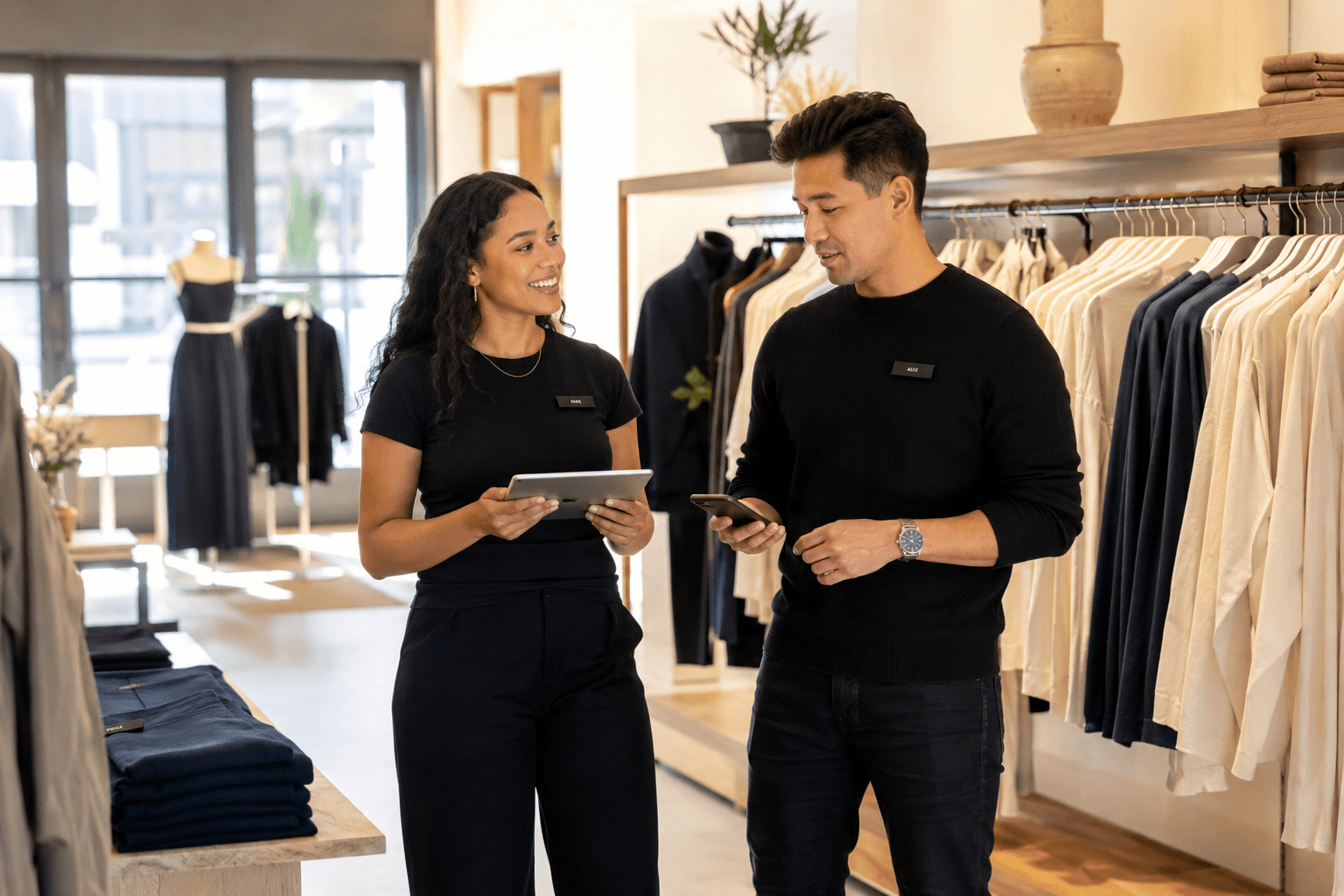
With this information at their fingertips, store associates can provide personalized service and check out customers anywhere on the sales floor, without switching between disconnected systems or sending customers to a fixed counter.
In this article, we explain what an omnichannel POS is, its key features, and how brands should evaluate different platforms.
What Is an Omnichannel Point of Sale?
An omnichannel point of sale (POS) is a retail system that supports selling across multiple channels, including physical stores, ecommerce websites, and mobile apps. By connecting sales, inventory, order, and customer information across these channels, it helps retailers deliver a consistent shopping experience while giving store associates the tools and information they need to serve customers.
For example, with NewStore POS an associate can meet a customer wherever they are on the salesfloor, check inventory availability, find the item a shopper wants, and complete the purchase.
Traditional POS vs. Omnichannel POS Systems
Traditional POS systems are not built to support omnichannel brands. They are typically disconnected from other systems, hard to customize, and make it challenging to integrate new features. Furthermore, they don’t allow brands to capture and utilize real-time data. Today, customers expect highly personalized, convenient experiences, and a traditional POS makes this difficult to deliver. On the other hand, an omnichannel POS allows brands to tap into real-time, game-changing data. A modern POS is a complete solution that makes it easy for store associates to deliver white-glove service and brands the ability to deliver an overall top-notch experience.
The difference isn’t where the sale happens, but how much of the customer journey the POS can support.
Omnichannel POS Software Features To Look For
An omnichannel POS should give store associates the information and tools to serve customers and check out customers seamlessly from anywhere in-store. Below are the key omnichannel POS software features to evaluate when choosing a platform for your retail brand.
Feature | Why it matters | NewStore capability |
|---|---|---|
Inventory visibility | Find available products across stores and warehouses. | Real-time, enterprise-wide inventory visibility. |
Endless aisle | Save sales when local stock is unavailable. | Source stock from another location or distribution center. |
Mobile checkout | Complete transactions quickly from anywhere in-store. | Mobile checkout, Tap to Pay, and split payments. |
Customer data | Personalize service using previous purchases and preferences. | Customer history, preferences, and clienteling. |
Omnichannel fulfillment | Offer convenient pickup and delivery options. | BOPIS, ship-from-store, ship-to-store, and order routing. |
Cross-channel returns and exchanges | Handle returns regardless of their original channel. | BORIS, return anywhere, exchanges, and inventory updates. |
Regular software and feature updates | Keep store technology current and support reliable operations. | Centrally managed cloud-based POS. |
Inventory visibility
Store associates can tap their omnichannel POS devices to find any size and styling information they need to assist customers without leaving their side.
Additionally, this capability is especially useful for brands trying to maximize their real estate in stores. Brands with smaller brick-and-mortar locations may want to display only one type of shoe on the sales floor and stow additional styles and colors in the back room. Omnichannel POS solutions can then help store associates easily sort through the inventory to find the exact product their shopper is looking for.
Inventory visibility should also extend across stores and warehouses, with availability updated as products are sold, received, or returned.
Endless aisle
Because an omnichannel POS provides superior inventory visibility, brands can also unlock endless aisle technology. Endless aisle enables staff to access and sell available products from other warehouses or retail locations, based on fulfillment rules. In addition to boasting inventory visibility, which lets store associates view real-time product availability from anywhere in the enterprise, endless aisle also offers customers a slew of order fulfillment options.
For example, if a shopper visits a brick-and-mortar store and realizes that their preferred shoe style and color is unavailable in their size, a sales associate can leverage endless aisle technology to find another location with that product in stock. The associate can then offer to ship the product directly to the customer’s home or to a nearby store location.
Endless aisle also drives more cross-sell and upsell opportunities, which can increase consumers’ average basket size. By giving store associates access to the full product catalog at their fingertips, they can browse for complementary items to recommend to shoppers. If a customer is looking to purchase new fashion sneakers, for instance, the associate can use endless aisle technology to see if the store also carries socks in a matching color.
Mobile checkout
With an omnichannel POS, brands can offer mobile checkout. The entire checkout process, from scanning products to processing payments, is all completed on a mobile device, which creates a faster, more seamless checkout experience.
Additionally, there’s an aesthetic appeal to using an omnichannel POS for mobile checkout. Rather than having customers see a clunky checkout counter, an omnichannel POS device adds a clean, modern vibe to the checkout and store experience.
Customer profiles and purchase history
With access to customer purchase history and preferences across online and physical channels, brands can offer more personalized product recommendations and experiences. With personalized data, brands can take their clienteling efforts to the next level, cultivating memorable experiences and loyalty.
Regular software and feature updates
A cloud-based omnichannel POS facilitates regular software and feature updates, promoting agility. Centrally managed updates reduce the need to maintain separate software installations at each store. Store associates access the platform through their devices, while connected data supports consistent workflows across locations.
Omnichannel fulfillment
An omnichannel POS should support connected shopping journeys such as buy online, pick up in-store (BOPIS), ship-from-store, and ship-to-store.
For example, a customer can order shoes online and collect them at a nearby store. Connected order management and fulfillment capabilities give store teams access to the order information and workflows needed to prepare the purchase and complete the handoff.
Cross-channel returns and exchanges
Customers may want to return an online purchase in-store or exchange an item bought at another location. Store associates should be able to retrieve the original order and process an eligible return or exchange according to the retailer’s policies.
Shared order information helps store associates resolve these requests without directing customers to another channel. Inventory records should also reflect the returned product’s location and condition.
Automation and AI in Retail POS Systems
An omnichannel POS connects store transactions with inventory, order, and customer data, creating opportunities to automate everyday tasks and support AI-powered workflows. The more connected these systems are, the easier it becomes to reduce manual work and give store teams access to the information they need.
Today, automation can handle tasks like updating inventory after a sale, applying promotions, and sending order notifications. This reduces repetitive work and gives associates more time to focus on customers.
Agentic capabilities can extend this further. For example, a store manager could ask an AI assistant which products are selling fastest across locations and get an answer based on current sales data, rather than manually compiling reports.
How To Choose an Omnichannel POS Platform
The right omnichannel POS should help associates serve customers, simplify store operations, and support your business as it grows. To find the right fit, evaluate how each platform handles the situations your teams encounter every day.
Use these steps to guide your evaluation:
- Identify your priorities. Start with the problems you need to solve. Are associates spending too much time checking inventory? Can stores accept online returns? Do employees have access to customer purchase history? Separate essential requirements from capabilities you may want to add later.
- Test complete customer journeys. Ask vendors to demonstrate scenarios from your stores, such as selling an unavailable size, preparing a pickup order, or exchanging an online purchase.
- Review data and integrations. Confirm how the POS connects with your ecommerce platform, inventory management, and other existing systems.
- Assess implementation and ongoing support. Ask what migrating products, customer records, and order history will involve, who is responsible, and how employees will be trained.
- Build the business case. Evaluate the total cost of ownership, including software, devices, payment processing, integrations, training, and support, and confirm which capabilities will cost extra.
Before selecting a platform, establish how you’ll measure success. Depending on your priorities, this could include checkout time, inventory accuracy, sales recovered through endless aisle, or customer satisfaction. Make sure to record your current performance so you have a baseline for evaluating results after implementation.
Help Store Associates Sell More With an Omnichannel POS
As the retail marketplace grows more crowded and brands attempt to reach more global audiences, leveraging an omnichannel POS solution can help store associates serve customers and complete sales anywhere in the store. The ability to tap into features like inventory visibility, endless aisle, and store fulfillment options enables brands to create more personalized shopping experiences while increasing the likelihood of driving sales.
Ultimately, consumers dictate the direction of the marketplace, and they increasingly want more experiences with a blurred line between digital and physical shopping channels. To meet the needs of their digitally savvy shoppers, retail brands should invest in a connected platform. NewStore puts POS at the core, with inventory, clienteling, order management, fulfillment, and payments available to add as needed.
Interested in finding out how your brand can use an omnichannel POS to transform the customer experience?
Omnichannel POS FAQs
How can an omnichannel POS system improve inventory management?
An omnichannel POS works with connected inventory systems to give teams visibility into stock across stores and warehouses. Updates following sales and returns help keep availability accurate, reducing manual reconciliation and the risk of selling unavailable products.
What is the difference between mobile POS and omnichannel POS?
Mobile POS allows store associates to complete transactions on a handheld device. Omnichannel POS connects transactions and information across sales channels. A mobile POS can support omnichannel experiences when connected with the relevant inventory, order, and customer capabilities.
Can an omnichannel POS work with existing retail systems?
Yes, depending on the platform and its integrations. Retailers should confirm compatibility with their ecommerce platform, order management, inventory, and customer systems. Ask which capabilities are native, which require integrations, and how information stays synchronized.
What Makes a POS Modern? 5 Myths and 4 Questions to Ask
Mobile, cloud, feature lists: five myths about modern POS, and four questions that show how a platform will actually perform in your stores.
Oct 15, 2026
Mobile POS vs. Traditional POS System: What’s Really Different?
A traditional POS system and a mobile POS system can both process a transaction. The difference is what each one allows the store to do around it. Traditiona…
Jul 28, 2026
Five Signs You’ve Outgrown Your Legacy POS
Legacy POS systems don’t usually announce that they’ve reached their limits. Instead, they ask for one more workaround. One more integration. One more manual…
Jul 14, 2026