What’s the Difference Between Customer Service and Clienteling?

Customer service has long been a cornerstone of retail success. It helps brands create positive interactions, solve problems, and support customers throughout their shopping journey. As customer expectations continue to evolve, retailers are looking for new ways to deliver more relevant and personalized experiences.
The difference between clienteling and customer service comes down to how customer information is used. While customer service focuses on meeting immediate needs, clienteling uses customer data to create more meaningful interactions over time. As a retail strategy, clienteling helps associates build stronger relationships, deliver personalized recommendations, and increase long-term customer value.
We’ll cover the differences and explain why clienteling is a strategy that no retailer should ignore.
What is Clienteling in Retail?
Clienteling is a business strategy that retailers use to establish and maintain strong relationships with their customers. By giving store associates access to customer information such as purchase history, size preferences, past interactions, and wishlist items, retailers can create more informed and relevant customer interactions.
Rather than treating every store visit as a standalone transaction, retail clienteling connects interactions across channels and over time. Associates can continue previous conversations, and provide a more consistent experience throughout the customer journey.
For retailers, the result is stronger customer loyalty, increased customer lifetime value, and more opportunities for repeat purchases.
The Difference Between Customer Service and Clienteling
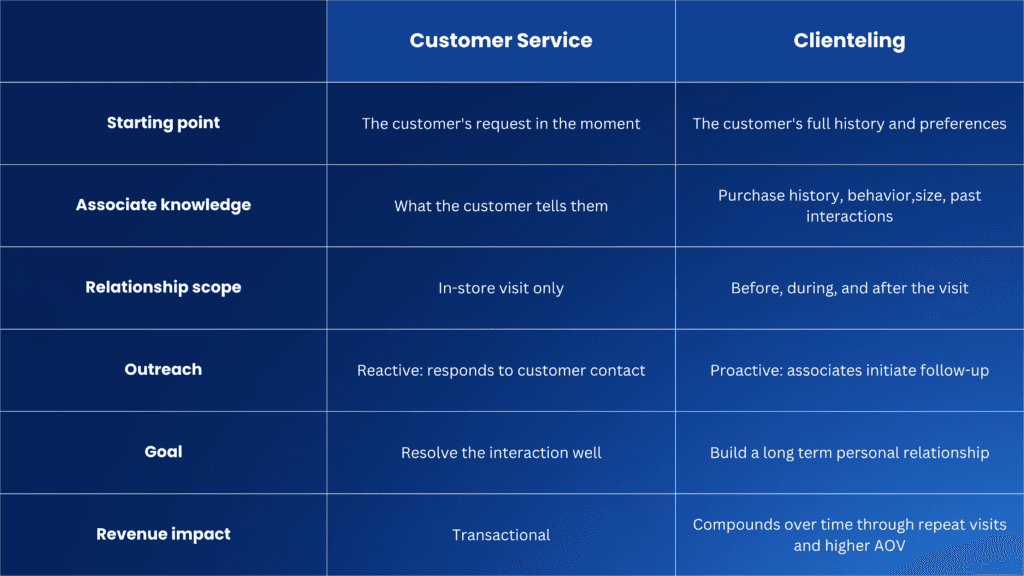
Both approaches share the same end goal: create a better customer relationship, but the key difference between customer service and clienteling lies in the way retailers reach that goal.
Customer service relies on the information available during a specific interaction. Clienteling on the other hand uses customer data to understand what shoppers want, how they interact with your brand, and details such as purchase history, preferences, and sizing information.
In a standard customer service model, a customer walks in asking for a gift and the associate starts from scratch. In a clienteling model, the associate already knows the customer bought a coat three months ago, their partner’s style preferences, and that they typically shop at the start of each season. The recommendation is specific. The customer feels understood.
That shift, from reactive to proactive, is what separates customer service from clienteling.
1. Creating a personalized shopping experience
There’s no arguing that personalization is crucial for retailers—80 percent of shoppers are more likely to do business with a brand if it offers them a personalized experience.
In a traditional customer service sense, store associates don’t usually have much information other than simple data like a customer’s order history. Companies that use clienteling strategies, however, can provide those associates with data about a customer’s behavior, interests, wants and needs. The result is a personalized shopping experience that a customer cannot get from a brand that does not know them.
This level of personalization also changes the economics of service. When an associate knows a customer’s preferences, they can introduce products that genuinely fit rather than suggesting whatever is on promotion. That drives higher average order value and stronger attachment rates, outcomes that generic customer service rarely produces.
2. Building better brand loyalty
One of the biggest goals of customer service is to build a loyal customer base. A great customer experience might be all it takes to turn some customers into brand advocates. But clienteling takes building brand loyalty to another level.
The first reason is personalization, covered above. When associates understand a customer’s preferences, even large retail brands can deliver the feel of a neighborhood store where the staff knows you by name.
The second reason is continuity. Standard customer service practices end when the customer walks out the door. Clienteling extends the relationship beyond the visit. Associates follow up with relevant product recommendations, notify customers about items that match their preferences, and reach out ahead of new arrivals via email, phone, or social media. That kind of proactive outreach builds a meaningful personal relationship between associate and customer over time.
Customer relationship management in retail often focus on loyalty programs and email campaigns at the brand level. Clienteling adds a personal layer on top of those systems, operating at the associate level and feeling human rather than automated.
Brands like UNTUCKit and Mackage have seen measurable revenue impact from clienteling precisely because it creates a relationship that drives customers back, not just to the brand, but to a specific associate they trust.
Why is Clienteling Important for Retail?
E-commerce has raised the bar for personalization across the entire industry. When a customer can get a highly tailored online experience from any brand on their phone, a generic in-store interaction feels like a step backward.
Customer service remains essential. Associates who are knowledgeable, helpful, and attentive create a positive experience that influences whether a customer returns. But in a competitive retail environment, attentive service is the baseline, not a differentiator.
Clienteling is the differentiator. It gives associates the data and tools to be genuinely responsive to each customer: suggesting the right product at the right moment, following up after the visit, and building a relationship that compounds over time.
Brands that equip associates with customer data outperform brands that rely on service training alone. The gap between the two is not about effort. It is about information.
Moving from Customer Service to Clienteling
Customer service is not going away. It is the foundation of any retail experience worth having. But it is not enough on its own to build the kind of loyalty that sustains a brand through a competitive market.
The difference between clienteling and customer service is ultimately the difference between reacting and knowing. One responds to what the customer asks for. The other anticipates what they need.
At NewStore, we help retailers equip associates with the tools and customer context needed to deliver effective clienteling experiences across channels. Watch the video below to see how modern clienteling helps retailers strengthen relationships, personalize engagement, and drive measurable business results.

How to Build a Retail Clienteling Program That Drives Store Revenue
Clienteling is often treated as a relationship tool, but the strongest programs do more than keep customers engaged. They create a consistent way for store t…
Jul 9, 2026
Clienteling in Luxury Retail
Learn why clienteling in luxury retail is necessary for creating highly personalized relationships and driving customer loyalty.
May 14, 2026
How to Create a Personalized Shopping Experience
Shoppers no longer separate the brand they meet online from the one they meet in store. They expect both to recognize them. They expect the conversation to p…
May 5, 2026