What Is Cycle Counting? How It Supports Inventory Management

A store’s inventory system can show five units of an item when only four are on hand. Shrinkage, picking mistakes, receiving errors, and delayed system updates can all throw off stock records between full physical counts.
Cycle counting helps retailers maintain inventory accuracy by checking selected items on a regular schedule.
Below, we explain how cycle counting works in retail stores, how it differs from a full physical inventory count, and how to decide what to count and how often.
What Is Cycle Counting?
Cycle counting is the practice of counting a small subset of a store’s inventory at a time on a recurring schedule throughout the year. Cycle counts can happen daily or weekly, with stores rotating through different items.
During an inventory cycle count, associates count selected items on the sales floor and in the stockroom, then compare what they find with the quantities in their inventory system. Catching discrepancies sooner helps store teams maintain inventory accuracy and know what’s available to sell, when to replenish stock, and which orders they can fulfill.
Physical Inventory vs. Cycle Counting
Retailers usually do a full physical inventory count once or twice a year. Counting everything in the store gives them a snapshot they can use to reconcile inventory records and support financial reporting. It takes some coordination, and stores may need to schedule staff after hours or close temporarily to get it done.
A lot can change between those counts. If a delivery is logged incorrectly a week later, the next cycle count for those items can flag the error. Because associates count a smaller group of items each time, they can fit these checks into a regular shift while the store stays open. Using both approaches gives retailers a complete count when they need one and helps keep day-to-day stock records accurate in between.
How Does Cycle Counting Work in Retail?
Cycle counting in retail involves selecting a small group of products, counting the units physically available in the store, and comparing those quantities against inventory records. Associates can complete these checks during regular store hours, helping keep inventory data accurate without interrupting sales or other daily operations.
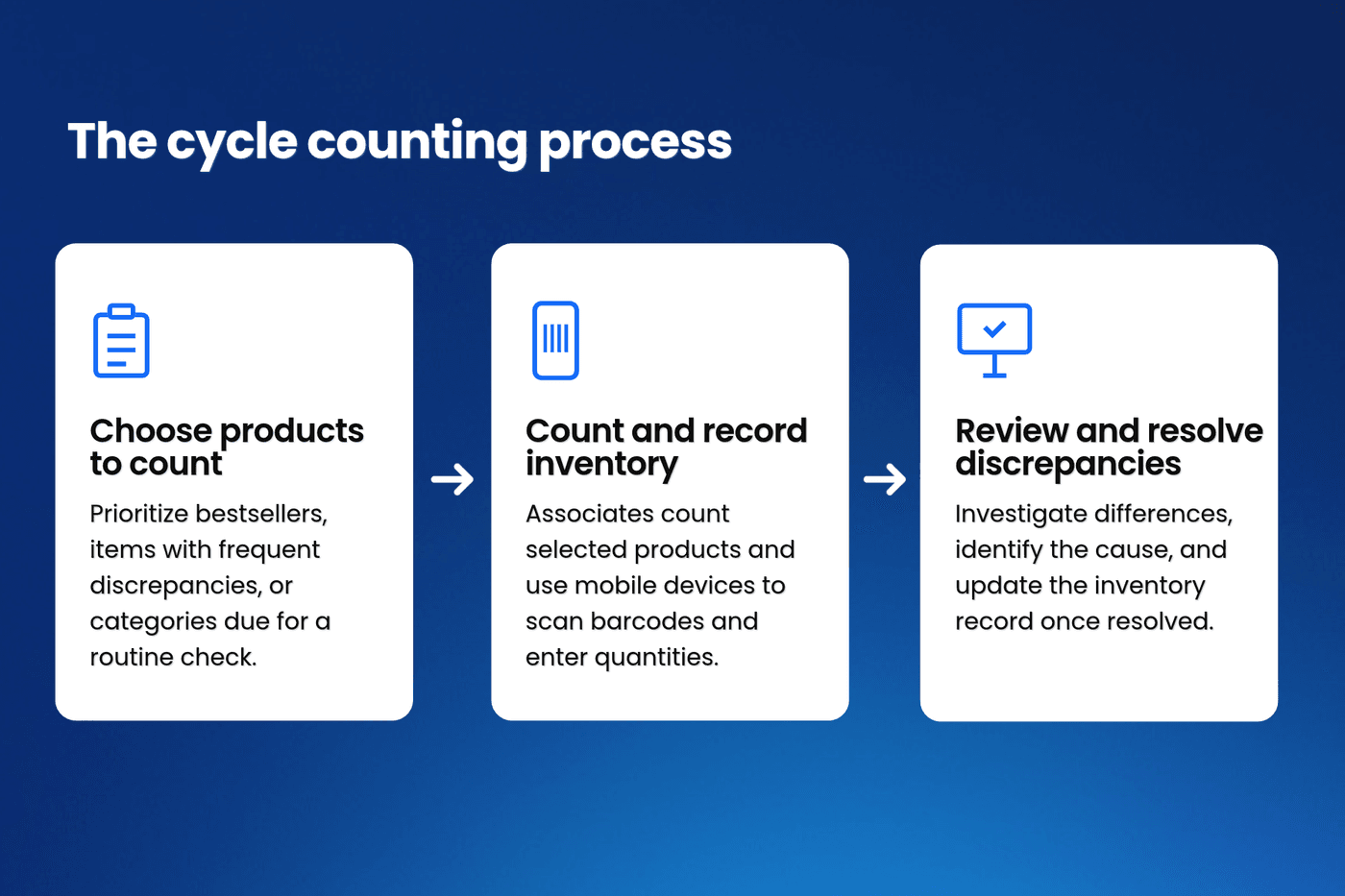
The cycle counting process typically involves three steps:
- Choose which products to count. Retailers may prioritize high-selling products, items with frequent inventory discrepancies, or categories scheduled for a routine check. For example, a footwear store might count its bestselling sneakers before a busy weekend to confirm that the quantities shown in its inventory system match what's actually available.
- Count and record inventory. Associates physically count the selected products and record the quantities. Mobile devices can make this process easier by allowing associates to scan product barcodes and enter counts directly on the sales floor or in the stockroom, rather than relying on paper worksheets.
- Review and resolve discrepancies. If the physical count differs from the inventory record, associates can investigate potential causes, such as a receiving error, misplaced merchandise, or an unrecorded transaction. Once the discrepancy is resolved, the inventory record can be corrected to reflect the actual quantity on hand.
With mobile POS technology, retailers can bring inventory-related workflows closer to where associates are already working, helping teams maintain more reliable stock information for customer inquiries, replenishment, and order fulfillment.
How Long Does Cycle Counting Take?
The amount of time cycle counting takes depends on the number of items being counted, how they're organized, and the tools associates have access to.
Outdated technology and manual processes can make routine inventory checks more time-consuming than necessary. Modern POS systems can streamline the process by allowing associates to scan items, record quantities, and complete counts directly from a handheld device.
For example, James Avery Jewelry reduced daily cycle counting time from approximately 60 minutes to 20 minutes per store using NewStore’s inventory management solution. That gives associates more time to assist customers and handle other store responsibilities while continuing to maintain accurate inventory records.
Benefits of Regular Cycle Counting
Regular cycle counting helps retailers maintain accurate inventory records, improve product availability, reduce canceled orders, and make better replenishment decisions. By identifying stock discrepancies early, stores can prevent inventory errors from disrupting sales, fulfillment, and daily operations.
Cycle counting helps retailers:
- Make more products available for sale. If associates find items that the system incorrectly shows as out of stock, correcting the count can make those products available for online purchases, store pickup, and other sales channels.
- Reduce canceled orders. Accurate inventory records make it less likely that a pickup or ship-from-store order will be routed to a store that doesn't have the items needed to fulfill it.
- Spend less time searching for inventory. When stock records reflect what's actually available, associates can answer customer questions and locate products for purchases or order fulfillment with greater confidence, rather than spending time searching for merchandise that isn't there.
- Improve replenishment decisions. An overstated inventory count can delay replenishment even when a store is running low on a product. An understated count can trigger unnecessary orders, leaving the store with excess inventory. Regular counts help retailers order or transfer stock based on actual demand and availability.
- Identify recurring inventory problems. If cycle counts repeatedly uncover discrepancies after deliveries, managers can review receiving procedures to see whether items are being counted or recorded incorrectly. Similar patterns involving transfers, returns, or unexplained losses can help identify processes that need attention.
- Maintain inventory accuracy over time. By identifying and correcting discrepancies throughout the year, retailers can prevent errors from accumulating between full physical counts. More accurate records also support inventory valuation, financial reporting, and reconciliation at the end of an accounting period.
Inventory Cycle Counting Methods for Retail Stores
Retailers can use several cycle counting methods to decide which products to count and how frequently to check them. The right approach depends on factors such as inventory volume, product value, sales activity, and where discrepancies are most likely to occur.
Common cycle counting methods include:
- ABC cycle counting. Products are divided into three groups based on their value or importance to the business. High-priority A items are counted most frequently, B items less often, and C items least frequently. For example, a fashion retailer might count its bestselling or highest-value merchandise weekly while checking slower-moving styles monthly or quarterly.
- Random sampling. Stores select a random group of products to count at regular intervals. This helps retailers check inventory accuracy across a wider assortment, including products that might otherwise receive less attention.
- Location-based counting. Associates count inventory in a particular area of the store, such as a department, display, or stockroom section. Stores can rotate through different areas over time, making it easier to organize counts around daily responsibilities.
- Exception-based counting. Retailers prioritize products when something suggests the inventory record may be incorrect. For example, if an associate can't find an item that the system shows as available, a count can help determine whether the quantity needs to be corrected.
Retailers can also combine methods, using ABC counting to prioritize important products while conducting additional checks when discrepancies arise. This helps stores balance regular inventory coverage with the need to address potential errors quickly.
Cycle Counting Challenges and Risks
While cycle counting helps retailers maintain inventory accuracy, errors in counting, recording, and updating stock quantities can undermine its effectiveness. Common challenges include:
- Staffing and labor costs. Regular counts require associates to spend time away from assisting customers, fulfilling orders, and other store responsibilities. Without proper scheduling, cycle counting can increase labor costs or compete with daily store priorities.
- Inaccurate counts. Sales, returns, and stock transfers can change inventory quantities while associates are counting. If these transactions aren't accounted for, stores may identify discrepancies that don't actually exist.
- Multiple locations. Retailers need accurate inventory records for each store and fulfillment location, along with a consolidated view across the business. Location-specific records help teams determine whether a discrepancy originated at a store, another facility, or during a transfer.
- Human error. Associates may overlook merchandise, scan the wrong barcode, or record incorrect quantities. These mistakes can introduce new discrepancies instead of correcting existing ones.
- Outdated technology and manual processes. Retailers that rely on paper counts, spreadsheets, or disconnected inventory systems may spend additional time entering and reconciling inventory data. Manual transfers between systems also increase the risk of errors and delay updates to stock records.
- Inconsistent counting schedules. If counts are frequently postponed or certain products are repeatedly overlooked, inventory errors can accumulate. Retailers need a consistent schedule that ensures products are checked regularly based on their importance and risk of discrepancies.
- Unresolved discrepancies. Correcting an inventory quantity without investigating why it was wrong can allow the same problem to recur. For example, repeated shortages following deliveries may indicate an issue with receiving procedures rather than missing merchandise.
Keep Inventory Accurate With NewStore
Accurate inventory data is essential for delivering a reliable shopping experience, whether customers are buying in-store, or placing orders for pickup or delivery. Regular cycle counting helps retailers maintain that accuracy without disrupting daily store operations.
With NewStore's mobile-first inventory management tools, associates can complete cycle counts directly from a handheld device, while real-time inventory visibility helps retailers make more informed decisions across stores and sales channels.
Learn how NewStore's inventory management solution can help your team simplify inventory tasks, maintain accurate stock records, and support more reliable selling and fulfillment.
Cycle Counting FAQs
Who is responsible for cycle counting in a retail store?
Store associates typically perform cycle counts, while store managers oversee schedules, review discrepancies, and ensure inventory records are updated correctly. Larger retailers may also have dedicated inventory teams that establish counting procedures across locations.
What is a blind cycle count?
A blind cycle count is an inventory check where associates count products without seeing the quantities recorded in the inventory system. This prevents the expected quantities from influencing their counts and helps identify discrepancies.
How is cycle count accuracy measured?
Retailers can measure cycle count accuracy using inventory record accuracy (IRA), which calculates the percentage of inventory records that match physical stock counts. Tracking IRA over time helps retailers identify recurring discrepancies and determine whether inventory accuracy is improving.
Can cycle counting replace a full physical inventory count?
Regular cycle counting can reduce the need for full physical inventory counts, but it may not eliminate them entirely. Retailers may still need complete counts for financial reporting, audits, or other business requirements.