The Real Costs of Stockouts (and How to Rescue the Sale)
Stockouts can cost retailers more than the immediate lost sale. They can reduce basket value, lead customers to shop elsewhere, increase fulfillment costs, and leave inventory unsold at other locations until it needs to be marked down. Some costs are immediate. Others emerge over time, especially when repeated stockouts affect customer loyalty.
Stockouts are difficult to avoid entirely. Demand shifts, deliveries run late, and inventory records do not always reflect what is actually on hand. But retailers can reduce how often stockouts happen and limit their impact when they do.
In this post, we’ll explain what stockouts are, why they happen, what they really cost, and how to prevent them. We’ll also explore how to save the sale when a product is out of stock at one store but available at another.
Table of contents:
- What Is a Stockout?
- What Causes Stockouts in Retail?
- What Is the Real Cost of Stockouts?
- How Can Retailers Rescue a Sale When a Product Is Out of Stock?
- How to Prevent Stockouts
- Save the Sale With NewStore
- Retail Stockout FAQs
What Is a Stockout?
A stockout occurs when a retailer has no inventory available to meet customer demand for a specific product at a store or sales channel. The product is then considered out of stock (OOS). A stockout can affect an entire product or just a particular size or color.
Stockouts generally fall into two categories:
- Network-wide stockouts: The retailer doesn’t have enough inventory across its network to meet demand.
- Local stockouts: A product is unavailable at one store but remains in stock at another location or distribution center.
To understand how often stockouts occur, retailers track their stockout rate. A simple way to measure it is to divide the number of unavailable SKUs by the total number of SKUs checked:
Stockout rate = (Out-of-stock SKUs ÷ Total SKUs checked) × 100
For example, if five out of 100 SKUs are out of stock at a store, its stockout rate at that moment is 5%. Regular checks can help you see which products and locations keep running short.
What Causes Stockouts in Retail?
Stockouts are caused by inaccurate inventory records, item count errors, gaps in demand planning and forecasting, supplier delays, and delivery problems.
Inaccurate inventory records and item count errors
Sales, returns, transfers, damaged goods, and counting mistakes can all lead to inaccurate inventory records. An associate might miscount a delivery, record a product under the wrong size or color, or fail to update stock levels after a sale or return. If these errors go unnoticed or changes aren't synced across systems, stores may think they have more inventory than they actually do. Poor inventory accuracy makes it harder to know when to replenish, increasing the risk of stockouts.
Gaps in demand planning and forecasting
A promotion, seasonal rush, or viral product can push sales beyond expectations. If forecasts underestimate demand or overlook differences in popular sizes and colors by location, a store can sell through its stock before the next delivery arrives.
Manufacturing disruptions and supplier delays
Material shortages, production interruptions, and supplier capacity limits can delay replenishment. If a supplier can’t provide the expected quantities on time, retailers may run out while waiting for new stock.
Delivery and logistics problems
Products can leave the supplier on schedule and still arrive late. Severe weather, transport disruptions, and routing errors can delay deliveries, leaving stores without the stock they expected.
Inventory available only at other locations
A store may run out of a product while another store or warehouse still has it available. Without visibility into that stock and a way to sell or fulfill it, associates may have to turn customers away.
Slow stock replenishment can also leave displays empty while products sit in the backroom, where they potentially get overlooked.
What Is the Real Cost of Stockouts?
Stockouts cost retailers sales, cut into margins, and put customer loyalty and trust at risk. The impact can last well beyond restocking because a customer who buys elsewhere may never come back.
Lost sales
When a product is out of stock, a customer may buy from a competitor or abandon the purchase altogether. You can also lose the rest of their basket if the unavailable item was the reason they came in.
To estimate stockout cost, use:
Estimated lost revenue = Days out of stock × Expected daily unit sales × Selling price per unit
For example, suppose a popular sweater typically sells five units a day at $120 each. If it’s unavailable for three days, the estimated lost revenue is:
3 × 5 × $120 = $1,800
This estimates the sales you could have made if demand continued at that rate. To estimate lost profit instead, replace the selling price with profit per unit. Neither calculation captures the full impact, such as lost future purchases or additional fulfillment costs.
Loss of customer loyalty and trust
A disappointed shopper may give you another chance. Repeated stockouts make that less likely. If customers can’t rely on your brand to have what they want, they may stop checking and shop elsewhere instead. That means losing potential future purchases alongside today’s sale.
Negative reviews
Customers may share their frustration in reviews or on social media, especially if your website showed an item as available before they visited. Those experiences can influence prospective shoppers and create extra work for customer service teams.
Backorder and fulfillment costs
Fulfilling a backorder can mean paying for a separate shipment, expediting delivery, and spending more time on customer service. Those extra costs reduce the profit on the sale, and delays can lead customers to cancel their orders. If stock is available at another location, store fulfillment can help get it to the customer sooner.
Markdowns at other locations
When a customer’s size is out of stock at one store but available at another, a lack of inventory visibility can leave the customer empty-handed and the item unsold. If it remains unsold, the product may eventually need to be marked down, reducing margins on inventory that could have met demand elsewhere.
Stockout Costs at a Glance
Cost | Immediate impact | Potential longer-term impact |
|---|---|---|
Lost sales | Missed purchase | Competitor gains the business |
Lost customer | Disappointed shopper | Loss of customer loyalty |
Negative reviews | Negative publicity | Reduced confidence in your brand |
Backorders | Extra shipping and service costs | Lower margins or cancellations |
Markdowns elsewhere | Missed full-price sale | Lower return on existing inventory |
How Can Retailers Rescue a Sale When a Product Is Out of Stock?
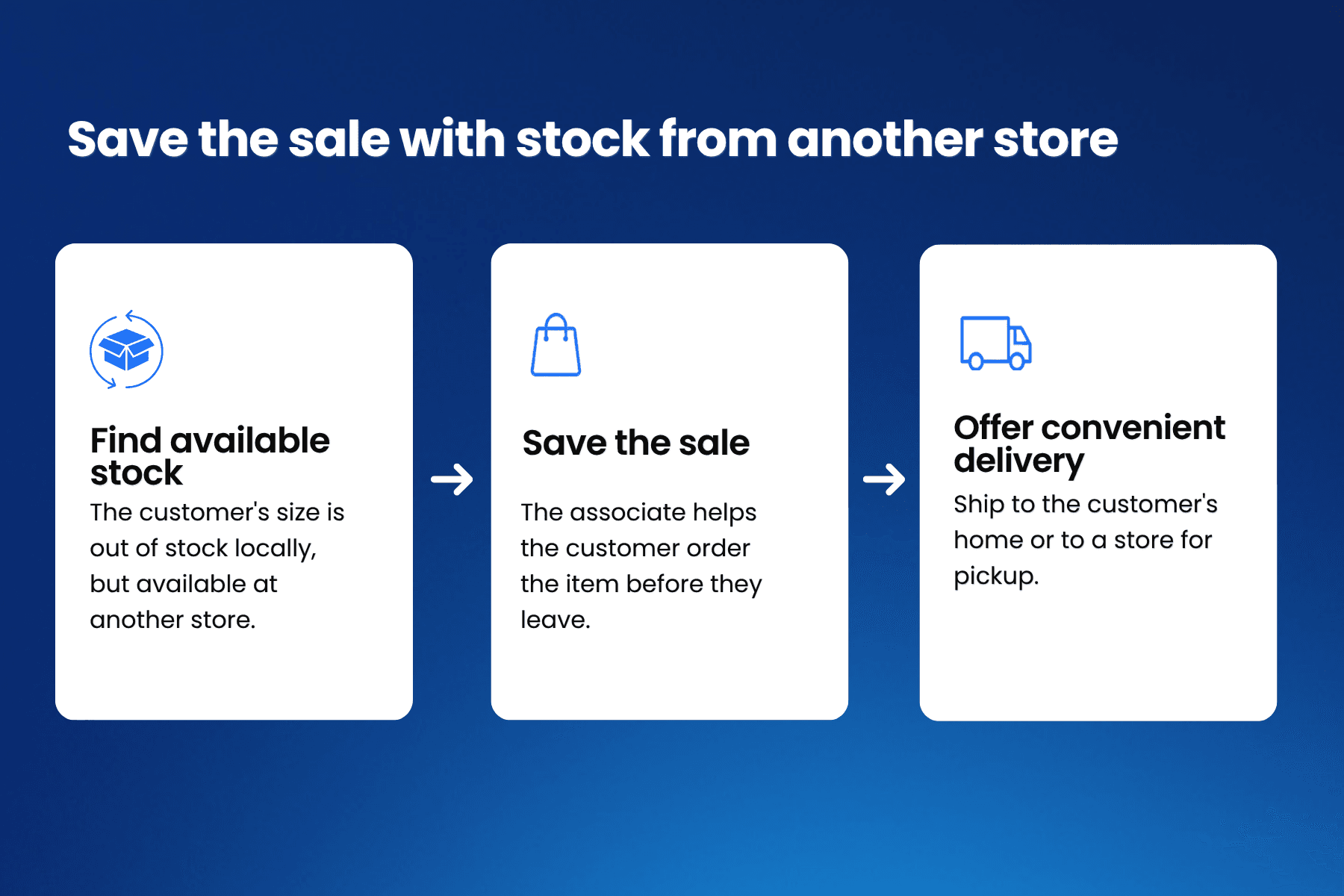
Even with careful planning, stockouts happen, but an empty shelf doesn’t have to end the sale. Retailers can rescue a sale by using accurate inventory data and connected store systems to help customers buy stock available elsewhere in their existing network.
If the customer’s size is unavailable at a particular location, an associate can check other stores and warehouses through their point of sale (POS). With endless aisle, they can place the order right there and offer available fulfillment options, such as home delivery or shipment to a store for pickup.
The customer gets the item they want, and your brand captures a sale using inventory it already owns.
How to Prevent Stockouts
Retailers can reduce stockouts by keeping inventory records accurate, planning for demand at each location, and reordering early enough to cover replenishment time. Staying in touch with suppliers and keeping a safety stock buffer also help when plans change.
Improve inventory accuracy
Accurate inventory records help your team spot shortages and replenish before products run out. Regular cycle counts can catch discrepancies, such as a delivery recorded as 12 jackets when only 10 arrived. Record sales, returns, transfers, and damaged items promptly, and keep updates synced across channels.
Plan inventory across locations
Look at what sells at each store, down to the size and color. If medium jackets are selling quickly downtown but sitting at a suburban location, it may make sense to transfer available stock before ordering more. Review local demand regularly so allocations keep up with buying patterns.
Improve demand planning and forecasting
Use recent sales, seasonal patterns, and local trends to keep forecasts current. If you’re planning a promotion on running shoes, account for the extra demand before it launches. Watch sales during the campaign, too, so you can adjust if a particular style takes off.
Monitor your supply chain
Stay in touch with suppliers about production schedules, shortages, and expected delivery dates so you can spot delays before stock runs out. If a shipment will arrive late, check whether existing inventory can cover demand and adjust your replenishment plans accordingly.
Set safety stock levels and reorder points
Safety stock gives you a cushion when demand jumps or a delivery runs late. How much you need depends on how predictable sales are and how reliably suppliers deliver. Set reorder points that cover expected demand during replenishment, plus that buffer, so you’re ordering before stock gets too low.
Track replenishment time
Measure the full journey from placing an order to making the product available to buy. A delivery arriving at the store doesn’t help a customer if it stays unpacked in the stockroom. If receiving or restocking starts taking longer, adjust your ordering schedule and restocking routines.
Save the Sale With NewStore
NewStore helps retailers make better use of inventory across their existing store network by connecting inventory, selling, and fulfillment. Associates can check available stock at other locations and help customers order an item that’s out of stock locally.
Retail leaders also get visibility into sales performance, inventory, and order fulfillment across channels. These reports help teams understand what’s selling, monitor stock levels, and identify trends so they can make more informed decisions across the network.
Book a demo to see how NewStore helps you turn available inventory into revenue.
Retail Stockouts FAQs
What is an example of a stockout?
A customer wants a size 7 in a pair of shoes, but that size is unavailable at the store where they’re shopping. That’s a stockout, even if other sizes or locations still have inventory.
How much safety stock should you keep to avoid stockouts without tying up cash?
Base safety stock on how much demand and replenishment times vary, along with your target service level. Review it regularly so you have a buffer without holding more inventory than you need.
Why does poor inventory visibility cost retailers sales?
When associates can’t see available stock across locations, they may turn customers away even though the product is available elsewhere. Inaccurate availability information can also lead to canceled orders and lost trust.
How can retailers avoid stockouts during peak season?
Plan inventory using seasonal demand, upcoming promotions, and supplier lead times, then monitor sales and stock levels closely. Keep counts accurate and arrange replenishment or transfers before products run out.
Retail Fulfillment: How to Create a Seamless Process
Quick and accurate fulfillment is crucial in today’s retail environment. Efficient retail fulfillment enhances the customer experience, drives loyalty, optim…

Retail Stock Replenishment: Why It's Important and Best Practices
Learn how retail stock replenishment works and best practices so you can keep products available, improve customer satisfaction, and protect margins.

Inventory Accuracy: How to Calculate and Improve It
Inventory is the heartbeat of retail operations. Learn the steps that retail brands can take to improve inventory accuracy.