Endless Aisle Live New York 2026: How AI and unified commerce are shaping the store experience
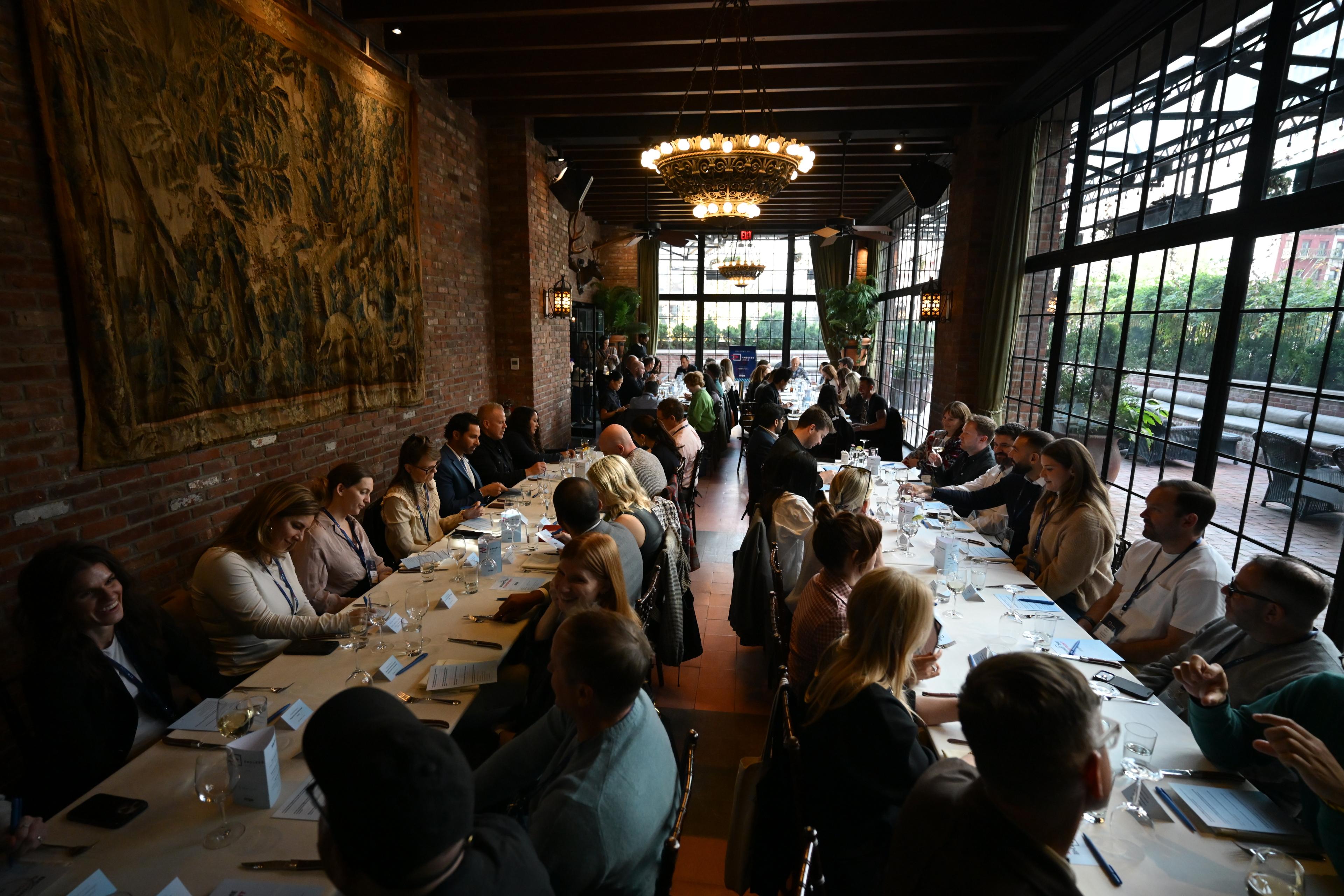
As AI changes how customers discover products and make purchasing decisions, retailers are rethinking what happens when those journeys reach the store. Connected technology, accurate inventory, and relevant customer information all have a role to play, but their value ultimately depends on the experience they help store teams deliver.
That challenge brought retail and technology leaders together for NewStore’s Endless Aisle Live New York 2026, held at The Bowery Hotel on October 28. Through executive discussions, visits to Marine Layer and Vince, and practical examples from Shinola, AllSaints, and James Avery, the event explored how retailers can prepare for emerging shopping behaviors while strengthening the experiences customers already value.
Across the day, a consistent theme emerged: the future of store operations depends on making complex capabilities feel simple. Whether customers are personalizing a sweater, completing a purchase remotely, or asking about a decades-old piece of jewelry, connected systems should give associates the confidence and freedom to help.
Agentic commerce brings the store experience into sharper focus
Opening the event, NewStore CEO Michael DeSimone explored the progress of agentic commerce, where AI agents help consumers discover, evaluate, and purchase products. His presentation examined both its potential and the practical gaps that remain when a shopping request involves urgency, personal taste, or a specific brand experience.
In one demonstration, AI assistants were asked to find socks needed that day. The exercise exposed the difficulty of translating product discovery into a purchase that met the customer’s immediate needs. DeSimone used the example to frame a broader question for retailers: how can brands preserve what makes them distinctive as more shopping activity is mediated by AI?
His examples ranged from the atmosphere of an R.M.Williams store, to the enthusiasm of Burton associates and the personal attention of shopping experience at Chanel. Each illustrated something that product specifications and price comparisons alone struggle to communicate.
“The store experience is the brand experience,” DeSimone said. For retailers developing their agentic commerce strategies, that makes the connection to physical retail essential. An AI-assisted purchase may still lead to an in-store return, an exchange, or a conversation with an associate, and those interactions need to feel like part of the same relationship.
Marine Layer: making experiential retail personal
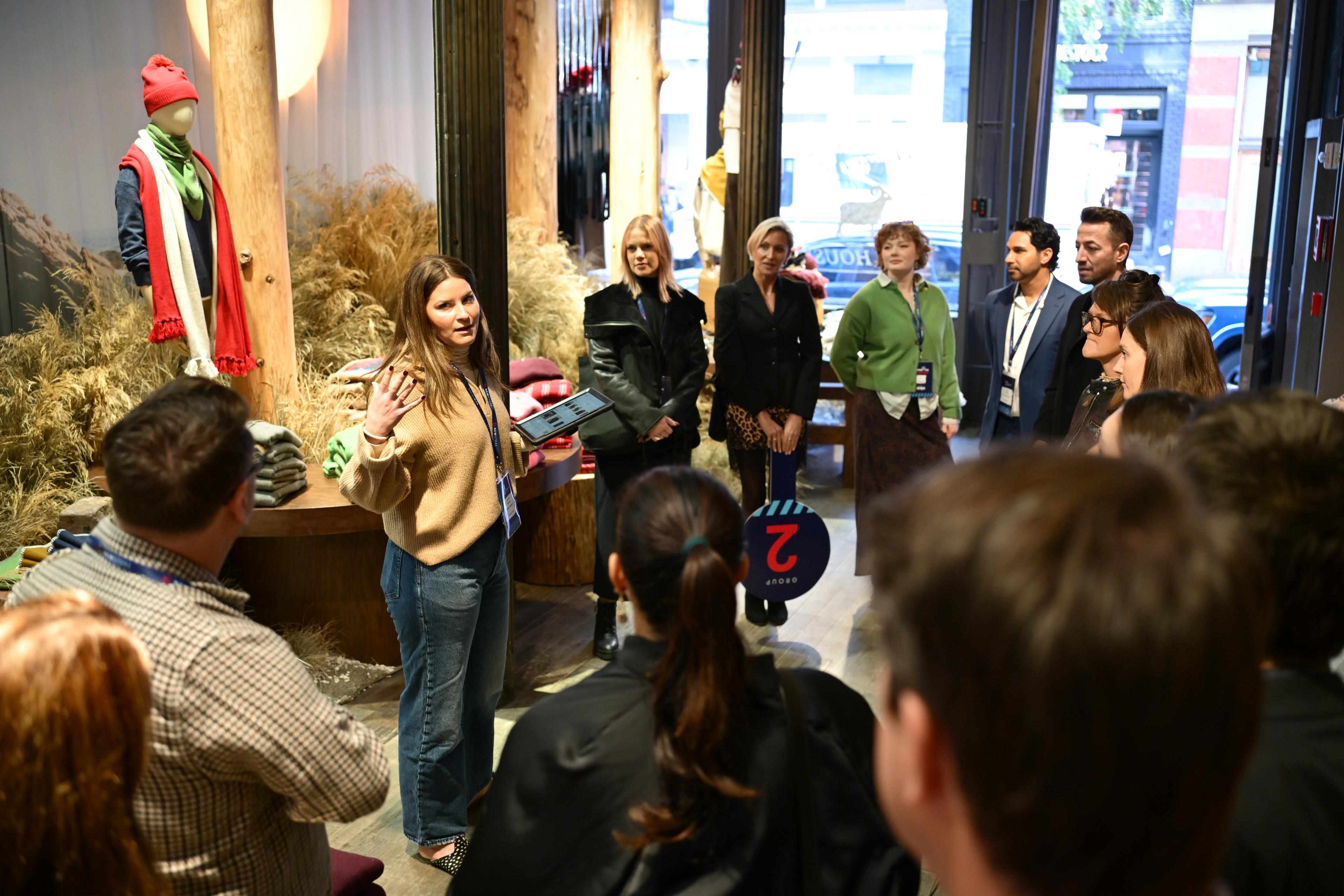
The store tours gave attendees an opportunity to explore those ideas firsthand. At Marine Layer’s Knit House pop-up, the brand combined its California identity with the textures and inspiration behind its Coastal Merino collection, creating an environment designed to encourage discovery, interaction, and customization.
Corinne Suarez, who leads Marine Layer’s retail channel, explained how the concept had evolved through earlier pop-ups. Those experiences helped the team understand both the appeal of personalization and the operational demands of delivering it. For Knit House, on-site embroidery machines made customization more efficient while giving customers a choice of thread colors and icons.
The experience extended beyond selecting a sweater. Customers could make the product their own, with collection or delivery arrangements tailored to their circumstances. Attendees experienced that process during the tour, and customized items were brought back to the event before the day ended.
Behind the environment was a coordinated effort spanning creative teams, store associates, embroidery specialists, and shipment handling. Marine Layer’s example showed how experiential retail relies on operational detail: the emotional appeal of a personalized product becomes more compelling when the process of ordering and receiving it feels easy.
Vince: connecting the store, fulfillment, and customer relationships
At Vince, the discussion focused on how the role of the store continues to expand. Jamison Shipley, Senior Vice President of Operations and Technology , described a location that now serves customers through in-person transactions, order fulfillment, and ongoing relationships that extend beyond the building.
That expanded role requires careful decisions about inventory and workload. Shipley explained how Vince had discovered that a high percentager of ecommerce orders were being fulfilled from stores because inventory was fragmented across channels. Addressing the issue meant revisiting how stock was reserved and made available across the business.
The lesson was that fulfillment performance needs to be understood in context. “There is no right percentage,” Shipley said of the share of orders shipped from stores. The appropriate balance depends on what a retailer is trying to achieve, from improving availability to moving stock or supporting seasonal demand.
For attendees exploring store fulfillment, Vince’s experience demonstrated the importance of connecting technology with inventory strategy, clear accountability, and the realities of store work. The customer may never see those decisions, but they experience the outcome through product availability, delivery, and service.
Clienteling keeps the conversation going beyond the store
Vince also offered a practical example of how clienteling can turn a brief store visit into a long-term customer relationship. Shipley described a shopper who found a jacket shortly before a dinner reservation but did not have time to complete the purchase. An associate sent a Remote Cart, allowing her to pay during dinner and collect the item afterward.
The example captured the value of connecting personal service with a convenient way to transact. The associate had already helped the customer find something she wanted; the technology allowed that interaction to continue around her schedule.
Shipley also emphasized that clienteling works differently across locations. In some stores, customers respond to a message by purchasing remotely. Elsewhere, the conversation prompts them to visit in person. Both behaviors matter, and measurement needs to reflect the way local customers choose to shop.
Shinola returned to this theme during the afternoon discussions. Its team described how Remote Cart helps associates serve customers who value a relationship with a store but cannot easily travel to it. Together, the examples showed how stores can build revenue and loyalty through relationships that continue between visits.
Retail transformation depends on the people using the tools
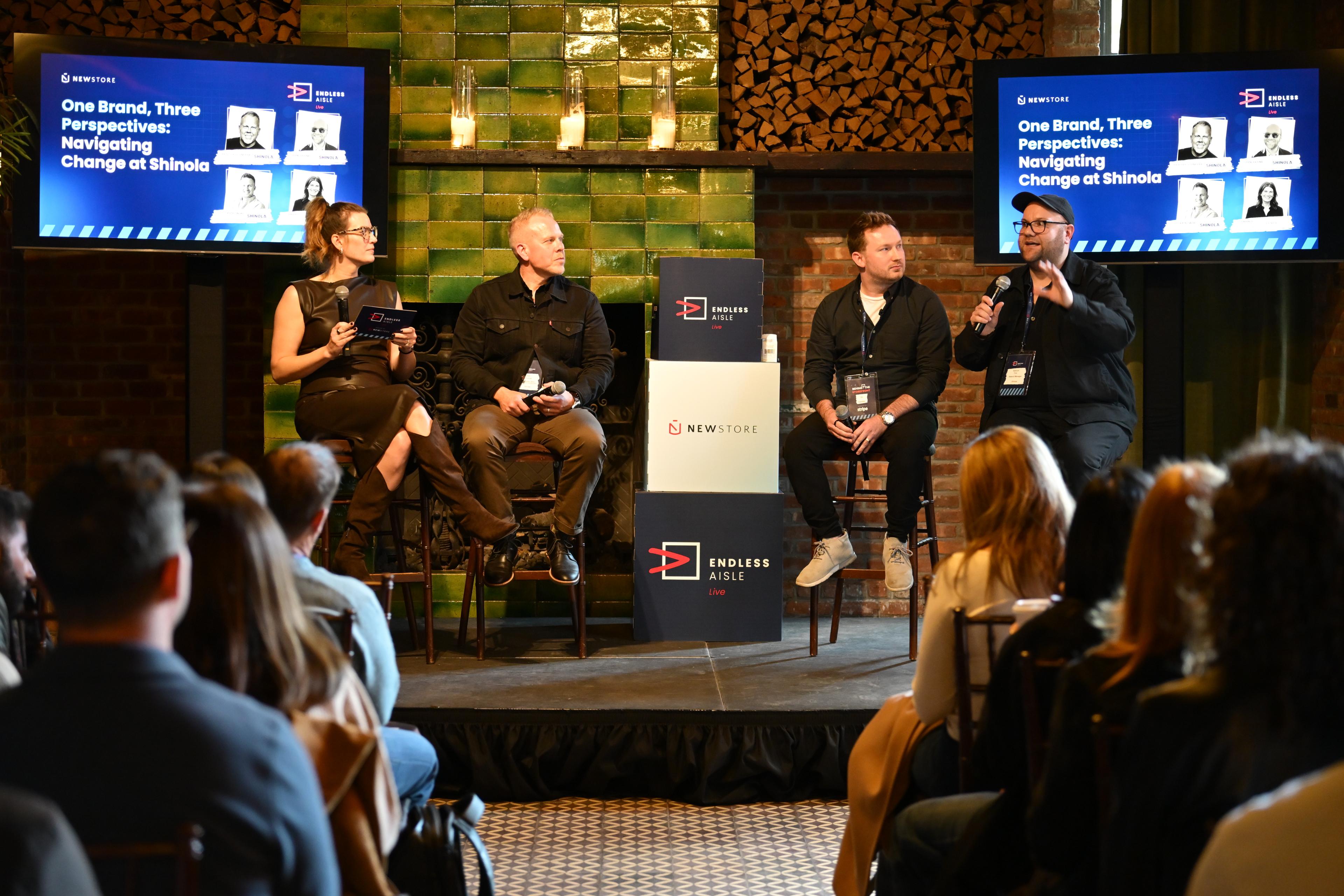
Shinola’s session brought the organizational demands of retail transformation into focus. In a conversation led by Tara Bos, Lead Customer Success Manager at NewStore, the team discussed replacing major systems across point of sale, enterprise resource planning, ecommerce, and warehouse operations.
Their experience highlighted how widely the effects of a technology decision can spread. A change originating in ecommerce, for example, can alter how store associates handle returns and exchanges. Successful implementation therefore requires collaboration across departments and a clear understanding of what changes will mean on the sales floor.
“You cannot work in silos. If you work in silos, something’s going to fall apart,” said Scott Rakowski, Shinola’s Senior Manager of Sales and Operations. The team described regular communication with stores, opportunities for associates to share feedback, and the importance of explaining new processes in practical terms.
District Manager Spencer Fink also emphasized the experience of the employees themselves. Teams need to understand the tools, feel involved in change, and retain the enjoyment of serving customers. As Shinola looked toward the holiday season, the emphasis was on getting more from the capabilities already in place and reducing operational pressure on associates.
Where AI can create practical value in store operations
The AI discussion moved from the future of shopping to specific ways retailers are supporting store teams today. Leaders from AllSaints and James Avery described initiatives grounded in product knowledge, inventory decisions, and access to useful information.
Alfie Meekings, AllSaints’ Chief Transformation and Technology Officer, explained how the business had invested in centralizing data, building AI capabilities, and establishing shared definitions. Even a familiar measure such as net sales can create confusion when teams interpret it differently, making governance an essential foundation for reliable insights.
At the time of the event, AllSaints was preparing to introduce AI-driven allocation and replenishment. The aim was to use historical patterns to make better decisions about the products and sizes sent to different stores, reducing the need for teams to repeatedly request changes. Meekings also discussed making product knowledge easier to search so associates could find relevant information quickly.
James Avery’s Harsha Bellur, Executive Vice President and CIO, shared a complementary example. The jewelry brand was testing an AI tool in three stores to help associates answer service and repair questions across its extensive product history. Rather than searching large spreadsheets, associates could query information or use an image to help identify a piece and understand the available service options.
Bellur summarized his broader vision as making information “all a question away.” These examples gave the AI conversation a practical purpose: helping associates access the knowledge they need at the moment a customer needs their help.
From connected channels to a continuous customer experience
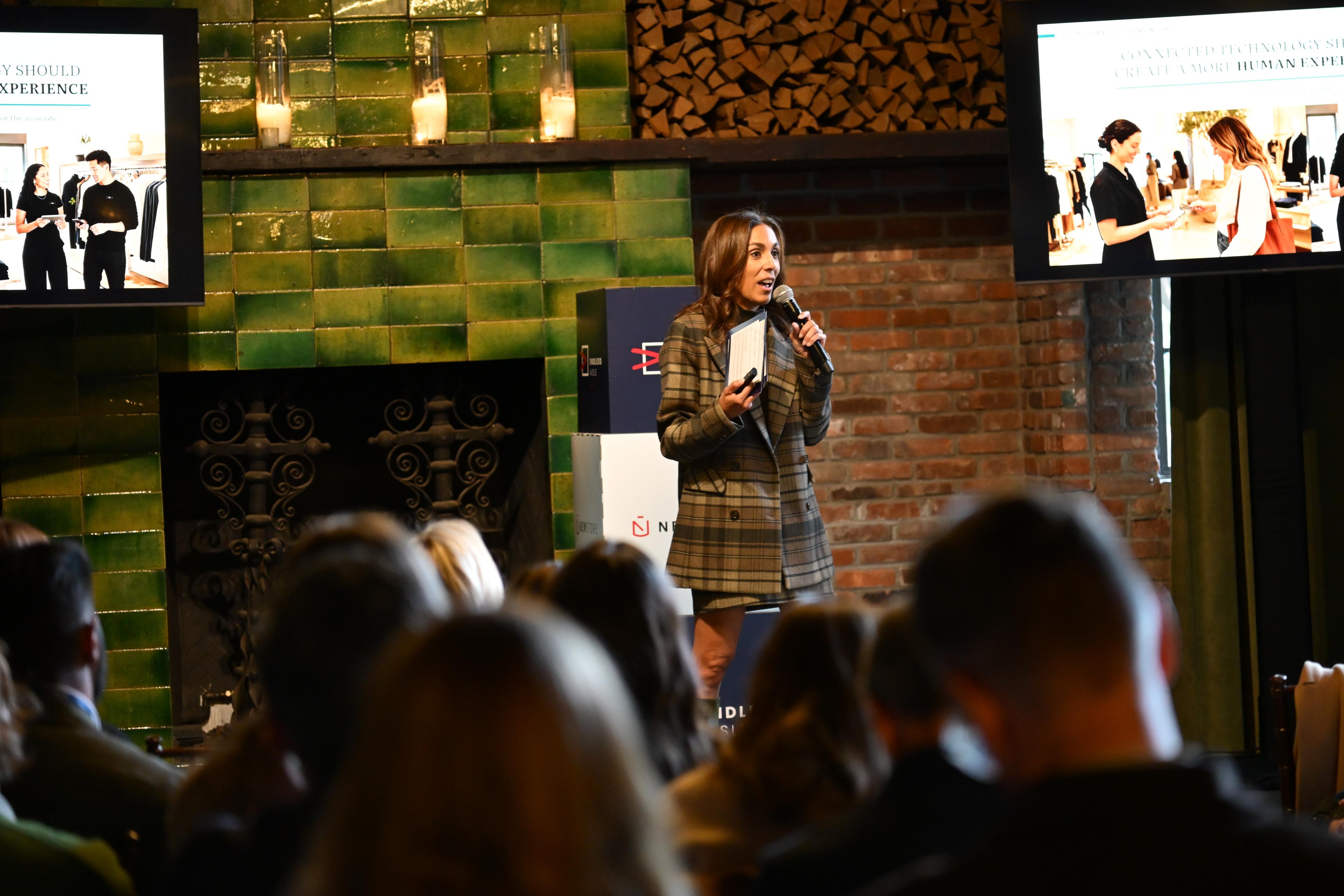
Closing the event, Melissa Gonzalez, Principal at MG2, brought the discussion back to changing consumer expectations. Customers discover brands through creators, social platforms, events, AI assistants, and personal recommendations, often arriving in a store with an existing understanding of what they want.
For Gonzalez, retailers need to design around continuity, recognition, and participation. Continuity means carrying the relationship forward across touchpoints. Recognition adds context to customer information, helping a retailer understand the occasion, preference, or need behind a purchase. Participation gives customers an active role in the experience through customization, creativity, and community.
“The store itself can never be where this journey starts over,” she said. That observation connected the day’s discussions, from making purchase history useful to associates to helping customers continue a conversation or personalize a product.
The store tours gave those principles a physical expression. Marine Layer invited customers to participate in creating something personal, while Vince demonstrated how attentive service could continue beyond a visit. Connected operations made both experiences easier to deliver.
What attendees want from the store of the future
During the event, feedback cards distributed among attendees asked questions about the future of in-person retail, adding another perspective to the stage discussions. Responses repeatedly raised disconnected systems, inventory availability, manual processes, and the time operational work takes away from customers. Attendees also identified opportunities for AI to support product recommendations, clienteling, reporting, and access to customer insights.
Expectations were varied, and enthusiasm for AI was accompanied by questions about its value and the importance of retaining human expertise. Taken together, the responses suggested a practical test for new technology: does it help associates deliver a better experience?
One attendee identified a barrier as “Investing in platforms without investing in people.” Ken Pilot’s response to the future-store prompt captured the ambition from the customer’s perspective: “As easy as shopping online, but a much more enjoyable experience.”
That focus on people was also reflected in NewStore’s Associate of the Year award, presented to JaimieLangner, assistant store manager at Marine Layer’s Bleecker Street flagship. Alongside her customer relationships and contribution to the store, the presentation recognized a product knowledge training program being rolled out across the wider store network.
The future of retail is built into everyday store operations
Endless Aisle Live New York 2026 connected emerging ideas about AI and agentic commerce with the everyday work of running stores. The strongest examples showed how inventory decisions, accessible knowledge, fulfillment processes, and customer conversations combine to shape the experience a brand delivers.
For retail leaders, the opportunity is to make those connections more useful to the people on the sales floor. When associates can trust their information, continue relationships beyond a visit, and spend more time helping customers, the value of unified commerce becomes tangible.
Explore how NewStore’s retail platform connects POS, inventory, fulfillment, and customer engagement to support modern stores.

Three Futures for Brand-Led Retailers in an Agentic World
AI agents are no longer an idea in retail. They are a reality. The future of agentic commerce is less about the agents themselves and more about the environm…
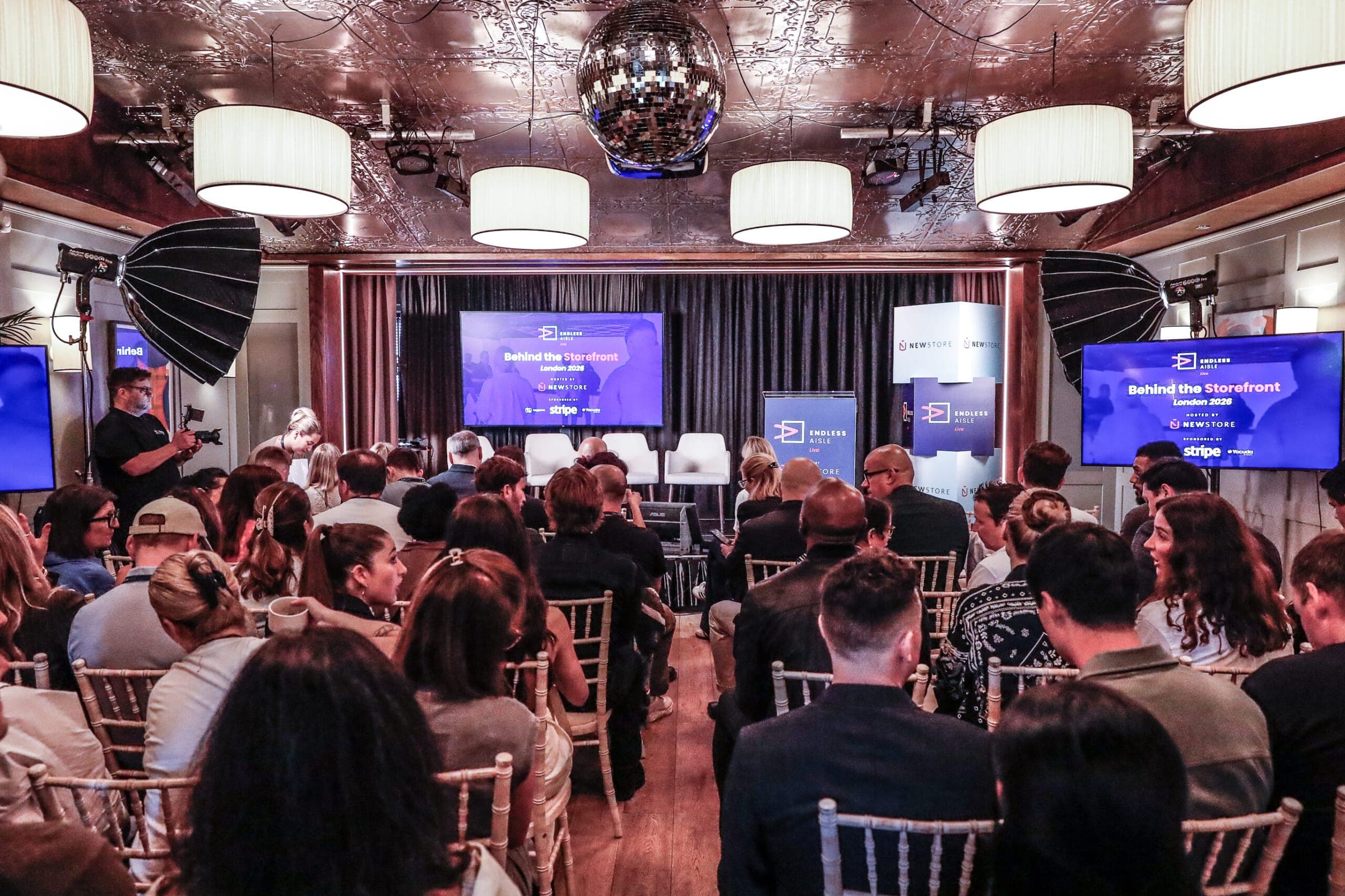
Endless Aisle Live London 2026: How agentic commerce, AI, and unified commerce are reshaping retail
Retail is entering a new era. As artificial intelligence accelerates, customer expectations evolve, and commerce becomes increasingly connected, retailers fa…